A Living Inquiry into Congruence
There is a phrase that many well-meaning, loved ones have offered to me when I have felt internally conflicted: just be yourself. I have offered versions of it to others too. But which self are we being asked to inhabit? The one performing? The one hiding? The one I think I should be? The 'self' I prefer? The one I would be if no one were watching, or the one I would be if everyone were?
When I have been in honest contact with life, when I have been touched, moved, when I have felt something in essence, the self has not been the question. Experience has passed through me rather than being contained in this vessel of identity we call our 'self'.
I have spent some time circling a different word, one that lies just beneath be yourself. The word is congruence.
I first came across it in Carl Rogers' writing, the founder of the person-centred approach. This was before I trained to become a therapist in the same approach. I remember being cautioned by our trainers that congruence was one of the most misrepresented pillars of the approach, and we were encouraged to inquire into it ourselves.
Rogers used it to describe the alignment between three things in a person: organismic experience (what is alive in you before it becomes a thought), awareness (what you allow yourself to know about it), and expression (what you do with it). Simply put, when those three line up, there is a kind of ease. When they don't, there is strain, a low hum of fatigue, a pressure behind the eyes, a feeling of being slightly to the left of your own life.
This essay, this 'project', is about that word.
What congruence is not
Before saying what I think congruence is, it helps to say what it isn't, partly because the word gets pulled in so many directions, and partly because each of these is something I have mistaken it for at one point or another.
Congruence is not transparency. People hold rich inner worlds that aren't always spoken aloud, and they don't need to be. To be congruent is not to disclose every feeling, it is to not hide from yourself what is happening inside you. Whether you say any of it out loud is a separate question, shaped by safety, by role, by who is in front of you and what is actually useful in this moment.
Congruence is not authenticity. These two words get used as if they were the same, and they overlap, but they do different work. Authenticity is concerned with values and consistency over time, with whether your life, taken as a whole, is in line with the person you understand yourself to be. There is a self, somewhere, that you are trying to be true to. A self-concept, held on its own, can calcify into something you defend. Congruence is concerned with immediate experience, with whether what is happening in you and what you are aware of are in contact.
Congruence is not self-improvement. This is the part I am most wary of, especially given that what I am building is, by name, a project. The risk is that congruence becomes another thing to attain - another version of the self to construct, monitor, and present. But congruence is not something you become. It is something you observe. Something you discover, again and again, in the noticing of what is already happening in you. Jiddu Krishnamurti, whose talks I have spent time with, kept returning to this: the very act of trying to become something puts you in a divided relationship with yourself.
Congruence is not constant. From what I have observed in myself, it is not a fixed state, and it is not a destination you arrive at. What seems to matter is not holding it, but staying in relationship with it. Returning to it. Letting yourself notice when you have drifted, and not making that another failure. Congruence is less a state to maintain than an ongoing willingness to be in contact with what is actually here.
What congruence is
Rogers gave us a three-part frame: experience, awareness, expression. The more I have lived with this word, the less sure I am that expression belongs inside the definition. Expression is what tends to follow when the inner alignment is there; it isn't, for me, what congruence is.
What I keep returning to is this: congruence is the contact between two things.
The first is organismic experience - the immediate, bodily-felt flow of being alive. The tightness, the warmth, the wanting, the recoiling. What is alive in you before you have named it or judged it. Before it has been turned into a thought about itself.
The second is choiceless awareness, a phrase I take from Krishnamurti. It is the observation of 'what is'. A quality of attention that is still, open, without preference. Memory, motive or ideal don't necessarily go away instantly. What changes is that there is awareness of them while they are doing what they do. You see the memory operating as memory. You see the motive pulling. You see the ideal shaping what you expect. Not noticed afterwards, but seen in the act. The conditioning is known with clarity and honesty, and the present moment can be met as something alive rather than as a repetition of what you already know. This, I think, is also where creativity begins.
When these two are in contact, there is relief. Less work being done internally to keep one part of you from knowing about another part. Less of the held breath of not lying to yourself.
When they are out of contact, when you are feeling one thing and telling yourself another, you are doing an enormous amount of unseen labour. People-pleasing, over-explaining, performing fine, performing wise, performing okay. It is exhausting. It is also, I think, the texture of most modern unhappiness.
What this changes
Here is what I have noticed, in my own life and in my work, from a year of thinking, talking, breathing and living in and around congruence:
- Decisions get easier, because inner friction resolves, there is greater clarity and choice is organic.
- Relationships clarify. Some get closer. Some get further. Both are useful.
- Emotions like grief, longing, hurt, anger become more bearable. You learn to move through feelings rather than be stuck in them.
- A particular kind of loneliness, the loneliness of being unknown to yourself, begins to dissolve.
- Direction clarifies. You stop being pulled toward what isn't yours. The friction of trying to belong somewhere you don't, or fit into a shape you're not, falls away. You know which way to go.
None of this happens in a straight line. It happens in spirals. You return to the same realisation three, four, ten times, and each time it lands a little differently. You think you've understood something about yourself, and then a year later you understand it again, and the second understanding is not a repeat, it's a deepening.
What this project is
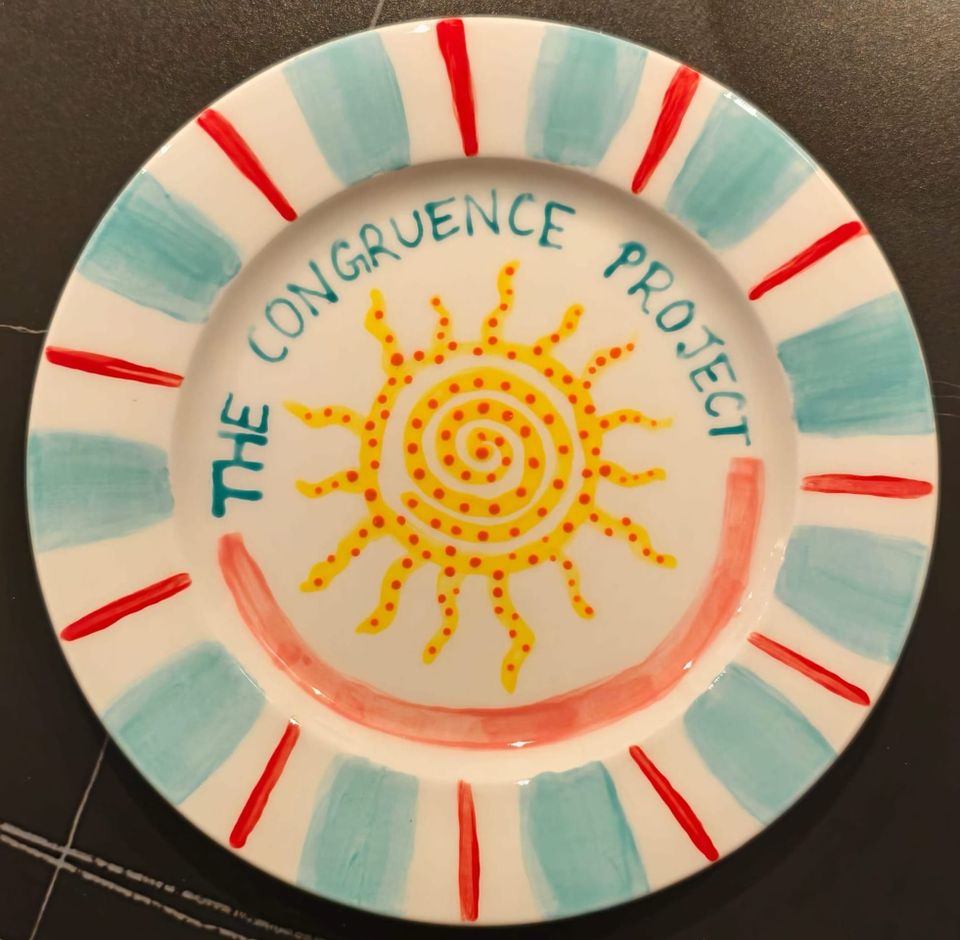
The Congruence Project is a living inquiry. Not a course, not a brand, not a body of advice on how to live. It is the writing-down of an inquiry as it happens, in the hope that some of it will be useful to others who find themselves circling the same word.
What I am committing to is the inquiry itself: writing into it, noticing it, letting it stay closer to the bone than to the brand. The form will follow what stays alive - essays, reflections, conversations, perhaps eventually gatherings and practices. I don't know yet exactly what shape this will take, and I am trying not to decide too early.
If any of this resonates, if you have been feeling slightly off-centre in your own life and not quite known what to call it, you are who I'm writing for.
What I'd ask, if you stay with this work, is the same thing I'm asking of myself: don't take any of it on faith.Test it against what is actually happening in you. Congruence cannot be taught. Only met.
Member discussion